Understanding Elimination Diets
Understanding Elimination Diets
Have you ever wondered why certain foods might not sit well with you? Do you suspect that some ingredients might be causing discomfort, inflammation, or even fatigue? If so, an elimination diet could be the answer you are looking for. This guide will walk you through understanding what elimination diets are and how they can benefit your health and well-being.
What is an Elimination Diet?
An elimination diet is a way to identify food intolerances and sensitivities by removing specific foods from your diet for a period and then reintroducing them slowly. It's like a food detective, helping you figure out what works for your body and what doesn't.
Why Consider an Elimination Diet?
Many people turn to elimination diets to:
- Identify food sensitivities: Some foods might cause minor or major reactions that aren't immediately obvious, like headaches, bloating, or fatigue.
- Improve digestion: By identifying troublesome foods, you can choose better options for a happier digestive system.
- Reduce inflammation: Some foods may cause your body to react negatively, leading to inflammation. Removing these can help decrease symptoms.
- Boost energy: By eating foods that agree with your body, you might notice an increase in energy levels.
Steps to Follow an Elimination Diet
Ready to try an elimination diet? Here’s a simple plan to get started:
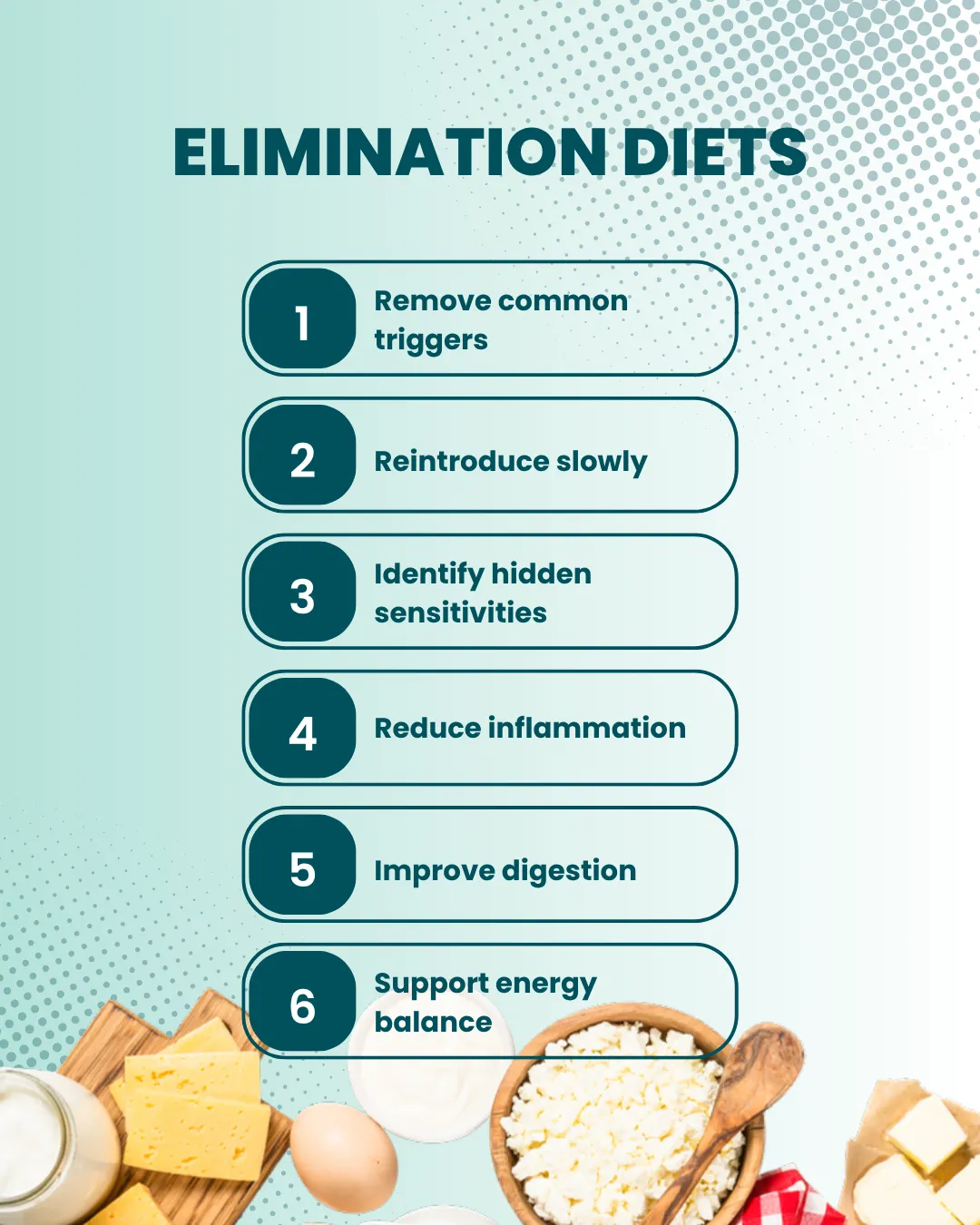
- Remove common triggers: Begin by removing common allergens and triggers like dairy, gluten, nuts, or eggs. This is the foundation of your reset.
- Reintroduce slowly: After a few weeks, carefully reintroduce one food at a time to observe any reactions. This slow process helps pinpoint problem foods.
- Identify hidden sensitivities: Some reactions might not be obvious. Keep a journal to track your meals and note any changes in how you feel.
- Reduce inflammation: While removing trigger foods, focus on including anti-inflammatory choices like leafy greens, berries, and fatty fish.
- Improve digestion: Support your gut with fiber-rich foods, probiotics, and plenty of water to ease digestion.
- Support energy balance: Make sure your diet remains balanced with proteins, healthy fats, and carbohydrates to maintain energy levels throughout the day.
Tips for Success
- Plan your meals carefully: Knowing what you’ll eat each day makes sticking to an elimination diet much easier.
- Listen to your body: Trust how your body responds to reintroduced foods to guide your choices.
- Consult a professional: If you feel unsure, a dietitian or healthcare provider can offer guidance tailored to your needs.
Conclusion
Elimination diets can be a highly effective way to learn about your body and what foods it thrives on. Whether it's about getting rid of that pesky afternoon fog or easing persistent bloating, identifying the right foods for you is empowering. Remember, it's all about finding what makes you feel best. Here's to happy, healthy eating on your journey to wellness!