Discover the Power of Deep Breathing
The Power of Deep Breathing: A Simple Guide for Better Health
In today's fast-paced world, finding moments of calm can be challenging. Yet, one of the simplest and most effective ways to enhance well-being is right under our noses—literally. Deep breathing is an accessible technique that can be practiced anytime, anywhere, offering numerous health benefits without the need for special equipment.
What is Deep Breathing?
Deep breathing involves taking long, slow breaths, filling your lungs completely, and then slowly exhaling. This technique helps manage stress and may provide several other health benefits. Here, we'll explore the key advantages of incorporating deep breathing into your daily routine.
Benefits of Deep Breathing
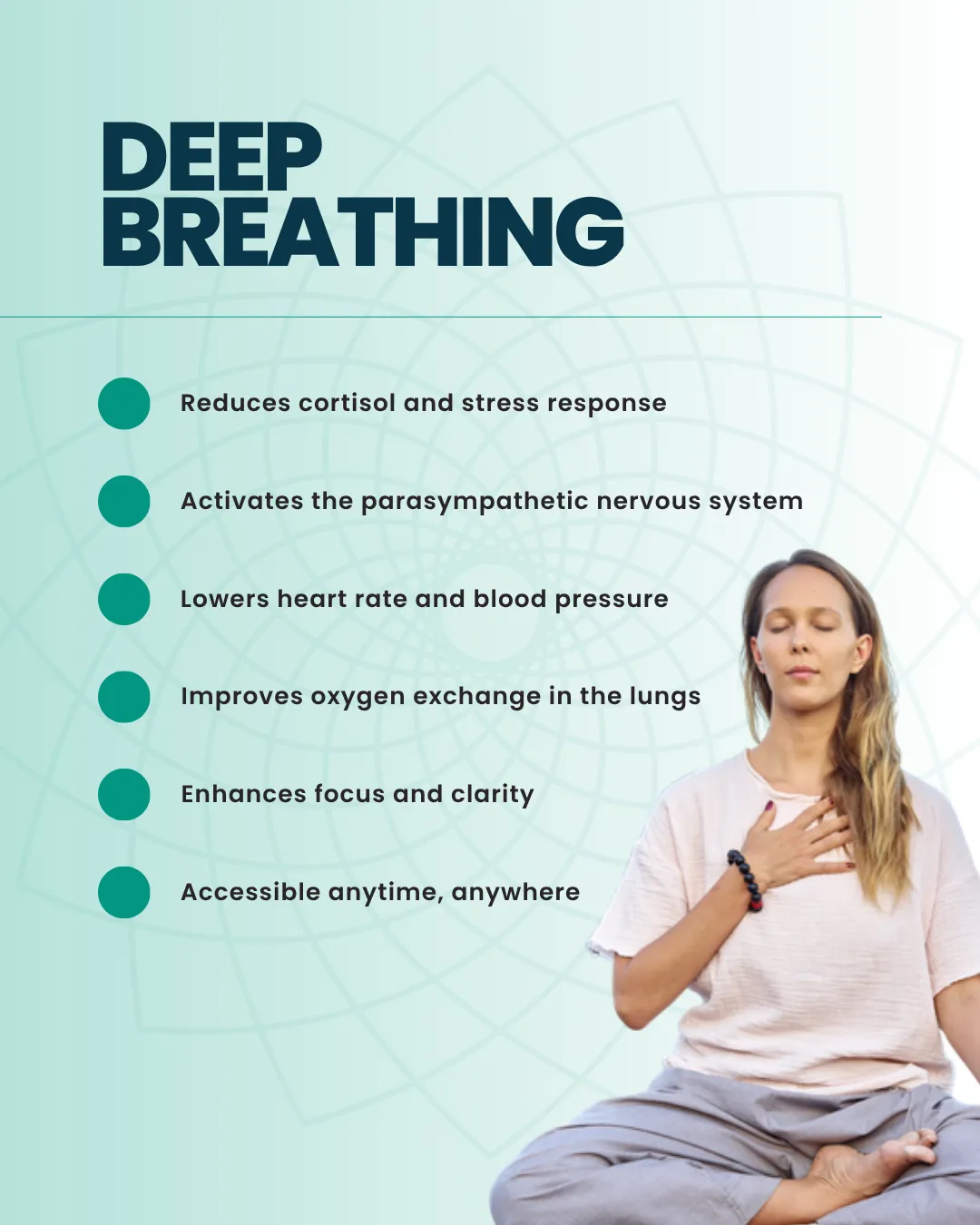
- Reduces cortisol and stress response: Deep breathing naturally lowers levels of cortisol, the body's stress hormone. By slowing down and focusing on each breath, you can shift your body's stress response to a more relaxed state.
- Activates the parasympathetic nervous system: This part of the nervous system promotes rest and relaxation. Through deep breathing, your body can transition out of the fight-or-flight mode, which is often triggered by daily stressors.
- Lowers heart rate and blood pressure: Regular practice of deep breathing can help keep your heart rate and blood pressure in check, offering a sense of calm and reducing the risk of stress-related heart issues.
- Improves oxygen exchange in the lungs: Deep breathing increases the oxygen intake in your lungs, which can enhance overall lung function and make it easier for your body to access the oxygen it needs.
- Enhances focus and clarity: By calming the mind and reducing distractions, deep breathing helps improve concentration and mental clarity, making it easier to focus on tasks at hand.
- Accessible anytime, anywhere: One of the greatest benefits of deep breathing is its versatility. Whether you're at work, home, or on the go, you can practice deep breathing exercises without any special setup.
How to Practice Deep Breathing
- Find a comfortable position. Sit or lie down in a quiet place where you can relax.
- Place one hand on your chest and the other on your belly. This will help you feel your breath as you practice.
- Inhale slowly through your nose, allowing your chest and then your belly to rise. Count to four as you breathe in.
- Hold your breath for a moment. Aim for a count of two.
- Exhale gently through your mouth for a count of four, feeling your belly and chest fall.
- Repeat these steps for several minutes, focusing on the sensation of your breath.
Integrating Deep Breathing into Daily Life
Consistency is key. Consider setting aside a few minutes each day dedicated to deep breathing. You could practice during a morning routine, at breaks, or before bedtime. The beauty of deep breathing is that it fits seamlessly into our daily lives.
Invite mindfulness into your practice, becoming aware of the breath and its journey through your body. With regular practice, you may notice not just immediate relief from stress, but long-lasting improvements in your mental and physical health.
Conclusion
Deep breathing is a powerful and effective tool for enhancing health and well-being. By regularly incorporating deep breathing exercises into your daily routine, you can reduce stress, improve focus, and enhance your overall quality of life. Simple yet effective, deep breathing is a practice everyone can benefit from, anywhere and anytime. Remember, the key to success is consistency. Start today, and experience the power of deep breathing for yourself!