Understanding Fiber's Detox Benefits
Understanding Fiber's Role in Detoxification
Fiber is a crucial part of our diet, but do we really understand its importance? Often found in fruits, vegetables, grains, and legumes, fiber is not only key for digestive health but also plays a vital role in detoxifying the body. Let's explore how fiber helps in detoxification and supports overall health.
The Importance of Fiber in Diet
Fiber is essential for maintaining a healthy digestive system. There are two main types of fiber: soluble and insoluble.
- Soluble Fiber dissolves in water to form a gel-like substance. It helps in slowing down digestion.
- Insoluble Fiber adds bulk to the stool and helps food pass more quickly through the stomach and intestines.
Both types of fiber have unique benefits that contribute to a healthy diet and body.
How Fiber Helps in Detoxification
Fiber plays a significant role in the body's detoxification process:
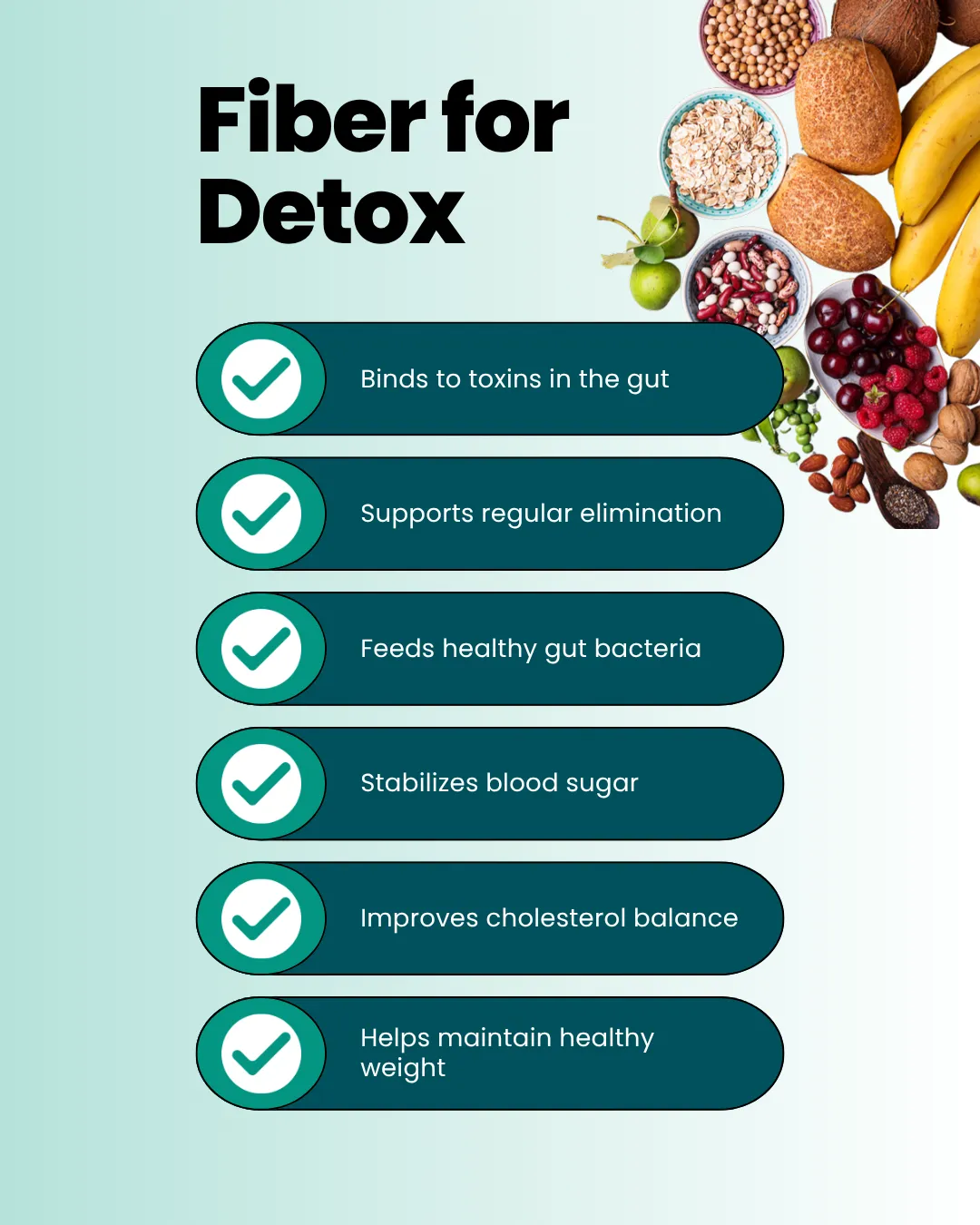
- Bind to Toxins: Fiber binds to various toxins in the gut, helping to carry them out of the body.
- Support Regular Elimination: A high-fiber diet promotes regular bowel movements, essential for eliminating waste and toxins.
- Feed Healthy Gut Bacteria: A fiber-rich diet feeds beneficial gut bacteria, supporting a balanced microbiome, which is crucial for overall health and detoxification.
- Stabilize Blood Sugar Levels: By slowing down the digestion and absorption of sugar, fiber helps stabilize blood sugar levels, reducing the risk of spikes.
- Improve Cholesterol Balance: Soluble fiber helps lower cholesterol by binding to it in the digestive system, preventing its absorption into the blood.
- Help Maintain Healthy Weight: Fiber-rich foods are often more filling and may help control appetite, contributing to healthy weight management.
Practical Tips to Increase Fiber Intake
Increasing fiber intake is simple and beneficial. Here are some tips:
- Start your day with a high-fiber cereal.
- Incorporate whole fruits and vegetables into your meals.
- Choose whole grains over refined grains.
- Snack on nuts and seeds.
- Add beans and legumes to salads and soups.
Gradually increase your fiber intake to prevent digestive discomfort, and ensure you're drinking plenty of water to help fiber do its job effectively.
Conclusion
Fiber is not just important for digestion; it plays a vital role in detoxifying the body, supporting a healthy gut, and maintaining overall health. By including high-fiber foods in your diet, you’re investing in a healthier future. Start today, and let fiber lead the way to better wellness!