Understanding Emotions as Useful Data
Understanding Emotions as Useful Data
Emotions are powerful. They can sway our decisions, shape our day, and even impact our relationships. But what if we viewed emotions as data rather than instructions? This perspective can shift our approach to mental health and personal growth.
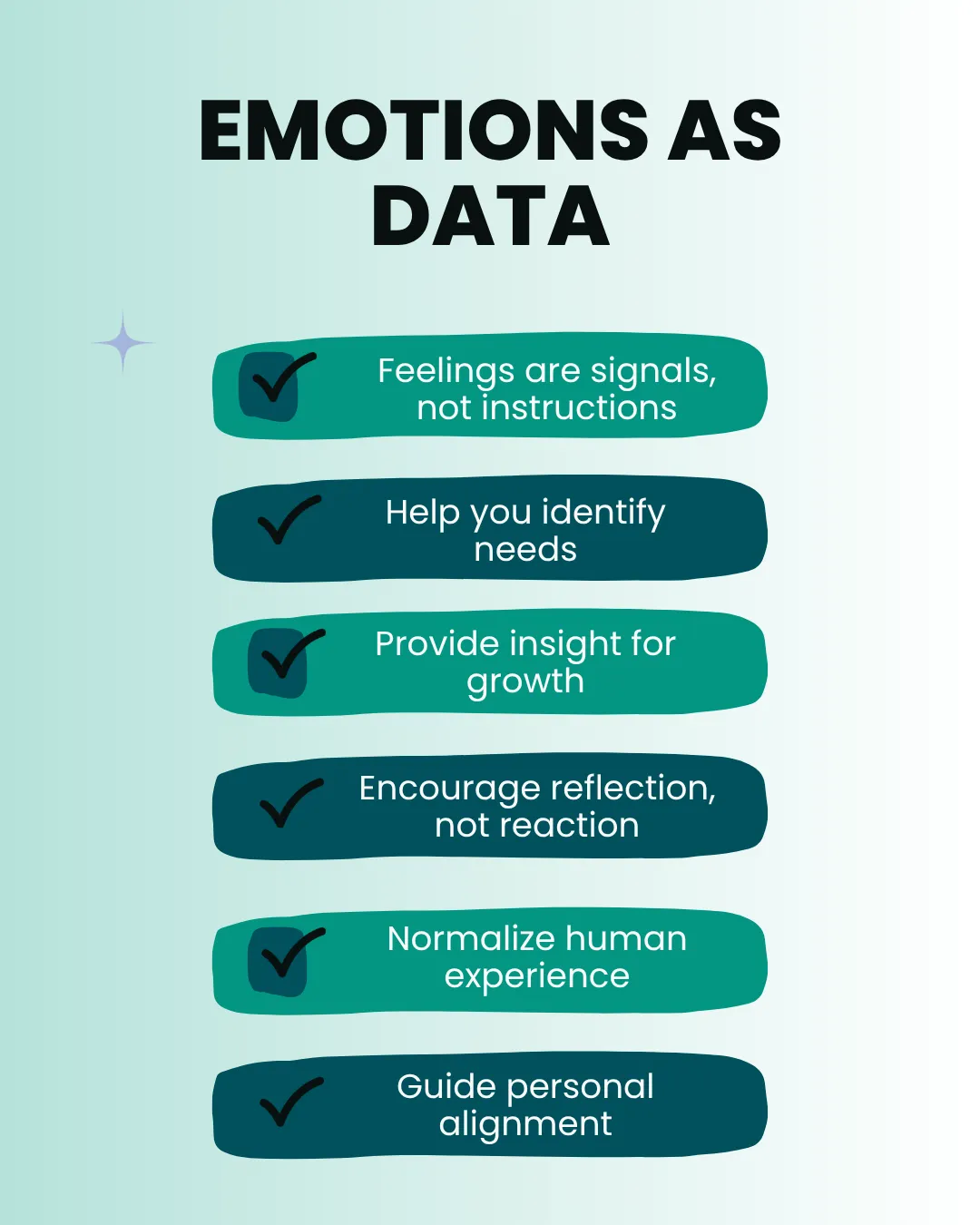
Feelings are Signals, Not Instructions
Emotions serve as signals. They aren't telling us what to do but are instead nudging us towards reflection. Just as a stoplight signals you to wait or go, emotions signal us to pay attention. Rather than reacting immediately, we should pause and assess what's really going on.
Help You Identify Needs
By treating emotions as data, we can better understand our needs. For example:
- Feeling hungry? You need food.
- Feeling lonely? You might need companionship.
- Feeling stressed? You may need rest or a break.
Each emotion provides clues about what we need to address in our lives.
Provide Insight for Growth
Emotions can also be a guiding force for personal growth. Understanding why we feel a certain way can help us learn more about our inner self. For instance, anger might indicate a boundary that needs attention. By paying attention, we can address underlying issues and grow from them.
Encourage Reflection, Not Reaction
Instead of reacting immediately, emotions should encourage us to reflect. Reflection leads to deeper understanding. When you feel a strong emotion, ask yourself:
- What exactly am I feeling?
- Why am I feeling this way?
- What can this emotion teach me?
This reflection process can prevent rash decisions and improve emotional intelligence over time.
Normalize Human Experience
All humans experience emotions. This commonality makes us uniquely connected. Recognizing emotions as a normal part of life can lessen the stigma around emotional expression. Everyone feels happiness, sadness, anger, and fear at some point. It's okay to feel and express these emotions.
Guide Personal Alignment
Emotions can help you align with your true self. By understanding your desires and aversions, you can make choices that align with your values. This alignment can lead to a more fulfilling and authentic life. For example:
- If a job makes you unhappy, it might be time to explore new career options.
- If certain relationships drain you, you may need to set boundaries.
Emotions as Tools for Wellness
Incorporating emotions as a tool for wellness can have far-reaching benefits. It can lead to:
- Improved relationships
- Better self-awareness
- Enhanced problem-solving skills
- Increased resilience
By seeing emotions as data, we empower ourselves to lead more balanced lives.
Conclusion
Emotions are more than just feelings. They are data points that provide valuable insights into our inner world. By viewing emotions this way, we not only improve our mental health but also pave the way for personal growth and fulfillment.
Remember, emotions are here to guide you, not define you. Use them wisely and embrace the journey towards understanding and acceptance.